Dinner Planning for Weekends
Published February 2026
Published February 2026
Evening meals during weekends often differ from weekday dinner patterns, creating opportunities for varied approaches to meal organization. This educational article explores concepts related to weekend dinner planning, examining food selection principles, timing considerations, and the diverse strategies individuals adopt during leisure evenings.
The information presented here describes general educational concepts without providing personalized recommendations. Different people develop different evening meal patterns based on their weekend activities, social contexts, and individual preferences.
Weekend dinner timing varies among individuals based on afternoon activities, social plans, and personal routines. Unlike structured weekday schedules, weekend evening meals often reflect more flexible patterns.
Educational resources on meal timing describe several patterns people commonly follow for weekend dinners:
Each timing approach exists in everyday life contexts, and individuals select patterns that align with their specific weekend circumstances and social engagements.
Educational materials on nutrition emphasize incorporating diverse food groups in evening meals. Weekend dinners provide opportunities to explore various combinations representing different nutritional categories.
Vegetables form a central component in many dinner concepts. Roasted, steamed, grilled, or raw vegetables in various colors provide nutritional diversity. Examples include broccoli, carrots, zucchini, bell peppers, cauliflower, green beans, and leafy greens. Different preparation methods offer varied textures and flavors.
Protein-containing foods appear prominently in educational dinner discussions. Examples include legumes, lentils, beans, tofu, tempeh, fish, poultry, eggs, or dairy products. Different individuals incorporate different protein sources based on their dietary patterns and preferences.
Whole grain options and starchy vegetables provide complex carbohydrates. Examples include brown rice, quinoa, sweet potatoes, whole wheat pasta, bulgur, or potatoes. These foods represent one category that nutritional education often discusses in the context of balanced evening meals.
Sources of healthy fats including olive oil, avocados, nuts, and seeds contribute to nutritional diversity and flavor. Educational resources mention these as components that individuals may include in varied dinner compositions.
The following examples illustrate educational concepts about balanced evening meals. These are descriptive examples only, not recommendations for any specific individual.
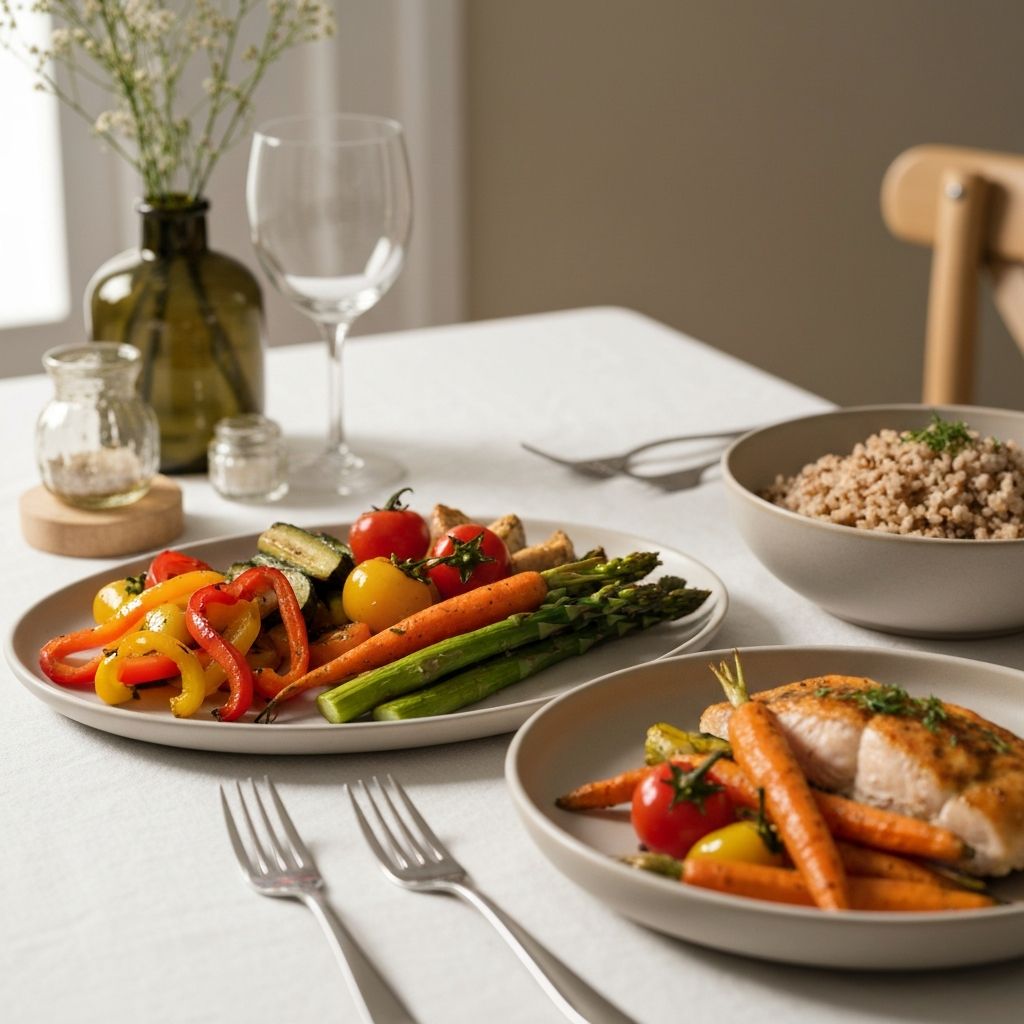
A plate featuring a variety of roasted vegetables such as broccoli, carrots, bell peppers, and zucchini, served alongside quinoa and chickpeas, represents one approach to combining multiple food groups. This concept illustrates nutritional diversity and vegetable-forward planning.
A bowl containing brown rice as a base, topped with sautéed vegetables, beans or lentils, avocado slices, and seeds demonstrates another organizational approach emphasizing component variety and balanced nutrition.
A plate conceptually divided into sections containing roasted or grilled protein, multiple vegetable sides, and a whole grain or starchy vegetable illustrates the educational principle of balanced nutrition across distinct food categories.
A large vegetable stir-fry incorporating diverse colorful vegetables with tofu or tempeh, served over brown rice or whole grain noodles, represents an approach emphasizing vegetable variety and plant-based proteins.
Weekend dinners frequently occur in social or family settings, introducing considerations regarding shared meal experiences and group dynamics.
When families share weekend dinners, food selection often involves accommodating different preferences and age groups. Educational resources explore how meal planning can incorporate variety while maintaining nutritional principles across diverse individual needs.
Weekend dinners may include gatherings with friends or extended family. These occasions present opportunities to explore diverse food options while considering group preferences and dietary variety.
Many individuals include dining out as part of weekend evening patterns. Understanding menu compositions and nutritional concepts helps inform food selection in restaurant settings, though personal preferences and circumstances vary widely.
Weekend dinner preparation approaches vary based on individual circumstances, available time, cooking skills, and personal preferences.
Some individuals utilize weekend time to engage in more involved dinner preparations, exploring complex recipes or time-intensive cooking methods. This approach represents one strategy for those who find cooking enjoyable and have available time during leisure days.
Others prefer simpler preparation methods even during weekends, focusing on straightforward cooking techniques and minimal preparation time. This approach allows for relaxed weekends without extensive kitchen time.
Many people use weekends to prepare components for upcoming meals, including weekday dinners. This strategy represents an organizational approach that integrates weekend cooking with overall meal planning.
Numerous individuals combine different approaches, preparing elaborate meals on one weekend evening while opting for simpler options on another, reflecting varied energy levels and weekend commitments.
Weekend activities and lifestyle patterns significantly influence dinner planning for many individuals. Evening social events, physical activities, entertainment plans, and rest needs all affect how people approach evening meal organization.
Active weekend evenings involving social engagements may lead to adjusted meal timing or simplified preparations. Relaxed weekends might allow for more elaborate dinner experiences. Travel or away-from-home weekends introduce entirely different considerations regarding food access and meal planning.
These variations illustrate the diverse ways individuals integrate dinner planning with their weekend lifestyles and commitments, reflecting the complexity of real-life meal organization.
Seasonal variations influence weekend dinner patterns for many individuals. Warm weather months may feature outdoor grilling, fresh seasonal vegetables, and lighter meal compositions. Colder months often see warming dishes, root vegetables, and heartier meal structures.
Ingredient availability changes with seasons, affecting food selection and meal planning. Educational resources on seasonal eating explore how aligning meals with natural growing cycles provides access to fresh, varied ingredients throughout the year.
This article provides educational information only. The content describes general concepts related to dinner planning without offering personalized advice. Individual nutritional needs vary significantly based on numerous factors including age, activity level, health status, and personal circumstances.
This educational resource does not replace consultation with qualified professionals such as registered dietitians or nutritionists. Different approaches to meal planning exist, and this article presents information for educational purposes without recommending specific actions to any individual.
No guarantees, promises, or assurances of outcomes are made or implied. The information provided is for learning purposes only.
Explore more educational articles about weekend meal planning
Previous Article Back to Blog